
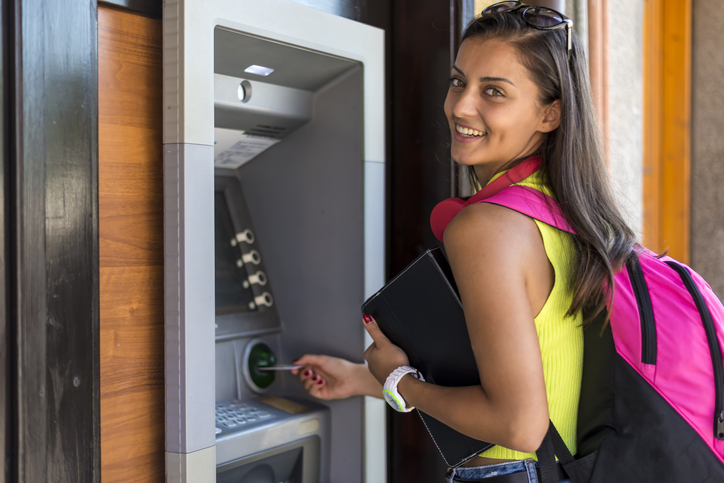
A checking account is often the first financial product people open, and for most, it becomes the one they use every day. It holds your money safely, gives you quick access when you need it, and comes with tools that make paying bills, tracking spending, and building credit easier.
Before looking at the eight specific benefits below, it helps to understand what a checking account actually is and how it works.
What Is a Checking Account and How Does It Work?
A checking account is a deposit account offered at a bank or credit union which allows the member to put in and withdraw cash with a bank teller, at an ATM, or through mobile deposit. At a credit union, deposits are insured by the NCUA, and members get fraud monitoring and protection on their debit card.
The member can also request a debit card connected to their checking account, which can be used like cash at most retailers. Doing so keeps their cash safe at a financial institution, but readily available for spending purposes.
8 Key Benefits of a Checking Account
1. Checking Accounts Are Easy to Open
Opening a checking account is easy. Many financial institutions allow customers to open an account with a deposit as low as $25. At 1st Ed, our members can open a checking account quickly and conveniently through our online application portal.
2. You Can Set Up Direct Deposits for Faster Paychecks
No more waiting for printed paychecks! Setting up direct deposit means your paycheck goes straight into your account from your employer, without an extra trip to deposit it yourself. Funds are deposited immediately and available for use on predetermined set payment days.
3. It’s Easy to Transfer Money
With a checking account, it’s convenient to transfer money between accounts. Online banking makes it easy to transfer money between checking and savings accounts and make payments toward loans you have at the same financial institution.
4. Shopping Is Easier with a Debit Card
Using a debit card connected to your checking account means you don’t have to carry cash. Payments are faster, and your card is accepted almost everywhere cash is.
Debit cards can be used at most places you shop – like grocery stores, gas stations, clothing stores, restaurants, and many other establishments. When you use your 1st Ed Debit Card, you can also enjoy the benefit of earning Reward Points from signature transactions. Rewards add up quickly and can be redeemed for gift cards, travel, cashback, and more!
5. You Can Earn Interest
When setting up a checking account, look to see if it earns interest. At 1st Ed, our checking accounts gain interest each month when there is a minimum of $100 in the account. Check out our interest rates to see how much you can earn!
6. You Can Pay Your Bills Online
With 1st Ed’s online banking, you can pay bills directly from your checking account — no checks, stamps, or trips to the mailbox required. Log in, select a bill, and send the payment in a few clicks through our free Bill Payer tool.
If you’d rather not log in every month, set up autopay instead. Mortgage, rent, insurance, car payments, school tuition — autopay covers it all, and most billers just need your routing and account number to get started.
Tip from 1st Ed: We recommend setting up your autopay a few days after each pay period when you know you will have enough funds.
7. They’re Good for Building Credit
One of the great benefits of a checking account is the opportunity to establish and build credit by using it to schedule on-time payments. Paying your bills on time improves your credit score.
A credit score is extremely important and considered when taking out loans, buying a house or car, and getting lower rates for insurance. Read our blog about How to Maintain a Good Credit Score.
8. Checking Accounts Help You Budget and Monitor Spending
A checking account makes it easy to monitor your spending, especially when you’re trying to stick to a weekly or monthly budget.
With an online or mobile banking account, you can track purchases to determine your spending trends and find ways to improve them. There are also many safe budget-tracking apps available to help you meet your budgeting goals.
Credit Union Checking vs Bank Checking: What’s the Difference?
Credit unions and banks both offer checking accounts, but the ownership structure changes the benefits you receive. Credit unions are member-owned and not-for-profit, which often means lower fees, no minimum balance requirements, and rates that work in your favor rather than a shareholder’s.
Deposits at a credit union are protected the same way they are at a bank. The NCUA insures member deposits up to $250,000, the same coverage the FDIC provides at a bank.
Because 1st Ed is locally based, checking account decisions — like overdraft exceptions or account questions — are made by people in your community, not a corporate call center. Learn more about why members choose a credit union.
Frequently Asked Questions About Checking Accounts
What is the advantage of opening a checking account at a credit union?
Credit unions are member-owned, not-for-profit institutions, which means they typically offer lower fees and more personalized service compared to traditional banks. At 1st Ed, checking is free with no minimum balance, earns dividends, includes overdraft protection options, and gives you access to over 32,000 surcharge-free ATMs nationwide.
What is the difference between a checking and savings account?
A checking account is built for daily transactions — paying bills, making purchases with a debit card, and depositing paychecks. A savings account is built to set money aside and earn dividends over time. Most people use both: checking for everyday spending, savings for building a reserve.
Are there any disadvantages to having a checking account?
The most common disadvantage is that checking accounts typically earn less interest than savings accounts, certificates of deposit, or money market accounts. Some banks also charge monthly maintenance fees or overdraft fees. However, credit unions like 1st Ed offer free checking with no minimum balance requirement to help members avoid unnecessary fees.
What is a checking account used for?
A checking account is used for everyday financial transactions such as depositing paychecks through direct deposit, paying bills online, writing checks, and making purchases with a debit card. It provides quick, easy access to your money and is the foundation of most people’s personal banking setup.
What do you need to open a checking account?
Most checking accounts require a valid photo ID, your Social Security number, and a small opening deposit. At 1st Ed, you’ll also need to qualify for membership, which includes living, working, worshiping, or attending school in our service area, or belonging to a partner organization or school district.
Do checking accounts earn interest?
Yes, many checking accounts earn interest, called a dividend at credit unions, though usually a smaller amount than a savings account. At 1st Ed, checking accounts earn a dividend each month once you maintain a $100 minimum balance. Check our current rates to see how much you can earn.
Does opening a checking account affect your credit score?
Opening a checking account typically doesn’t affect your credit score, since most banks and credit unions don’t run a hard credit inquiry for a standard checking account. They may check a consumer banking report to review your account history instead, which has no bearing on your credit score.
Does closing a checking account affect your credit score?
Closing a checking account usually doesn’t affect your credit score either, since checking accounts aren’t reported to the credit bureaus. The one exception is if you close an account with a negative balance and it goes to collections; that could show up on your credit report.
Is a debit card a checking account?
No, a debit card isn’t the account itself; it’s a tool linked to your checking account that lets you spend those funds like cash at stores or ATMs. The checking account holds your money; the debit card is simply how you access it day to day.
Can you have two checking accounts at the same bank?
Yes, most banks and credit unions, including 1st Ed, allow members to open more than one checking account. Some members do this to separate bills from spending money, or to manage a joint account alongside an individual one. Ask a member service representative to help set one up.
Does 1st Ed offer rewards checking?
1st Ed doesn’t have a separate rewards checking account, but your standard checking already includes two built-in perks: it earns a dividend when you keep at least $100 in the account, and every debit card purchase earns 1st Ed Rewards Points, redeemable for cashback, travel, gift cards, and more.